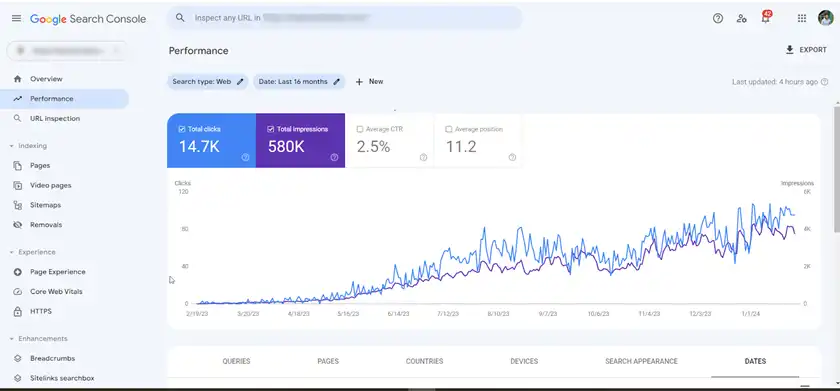
This niche site case study is the story of a keyboard blog we built from a fresh domain. It is our own project, not a client’s. The domain was registered on 16 February 2023, and by the time it was 11 months old it had earned 14,746 clicks from Google, 2,053 of them in the last 28 days, without a single link built. Below are the real numbers, the screenshots, what went wrong and what I’d change today.
The Short Version
Here is the whole project on one card, as we recorded it when the domain was 11+ months old:
| Metric | Result |
|---|---|
| Domain registered | 16 February 2023 |
| Domain age at snapshot | 11+ months |
| Total articles | 111 (33 manual, 78 AI-assisted with human editing) |
| Daily traffic | 71+ (average of the last 15 days) |
| Traffic, last 28 days | 2,053+ clicks, 109K impressions |
| Traffic, last 3 months | 7,093+ |
| Traffic, last 16 months | 14,746+ |
| Monthly visitors reported | 2,800+ |
| Links built | None |
| Domain Rating / Domain Authority | DR 7 / DA 12 |
| Penalty | No |
| Monetization | Not applied yet |
A note on “16 months”, because it confused readers of the first version of this post. Sixteen months is simply the longest date range the Search Console Performance report offers. Our domain was only 11 months old, so that 14,746 figure is the site’s entire lifetime in Google, not a 16-month project.
One more note. Search Console only counts clicks from Google Search, so its 28-day figure (2,053) runs below the 2,800+ monthly visitors in our original write-up. Keep that in mind when you compare the two.
Why Did We Build 30 Niche Sites in 30 Days?
The keyboard site was one of a batch. Our goal was to launch 30 niche sites within 30 days, and the team hit it: 30 sites went live in a month, each with 5 to 10 articles. We wanted a portfolio, not one bet, because in my experience a single niche site tells you more about luck than about process.
We scored niches on four things: search volume, competition level, non-commercial (informational) intent and room for deep content. Computer keyboards passed all four. Keyboards generate a steady stream of questions about switches, layouts and compatibility, which meant plenty of informational topics to cover.
The non-commercial filter was deliberate. A new domain with no links has little chance on “buy” keywords against big retailers, so informational intent was the whole plan.
How Did the Keyword Research Work?
We started with seed terms and pulled ideas from Google autocomplete and related searches, then ran them through Ahrefs and Semrush. That produced a list of more than 500 keyword opportunities.
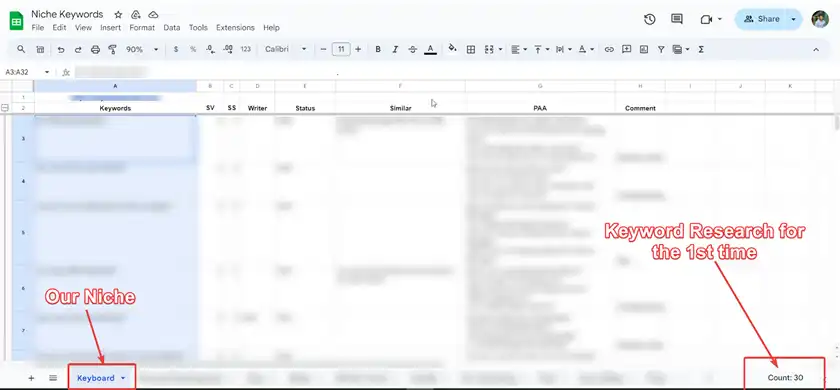
From those 500+, we picked 30 primary keywords for the launch plan. The filter was simple: low to medium competition, informational intent, and questions we saw repeated across forums and communities. My favourite filter is still the forum check. If real people keep asking a question, it earns a place on the list.
This is the same process we now run for clients on our keyword research service, including the topical map that decides which article links to which.
What Did the First Three Months Look Like?
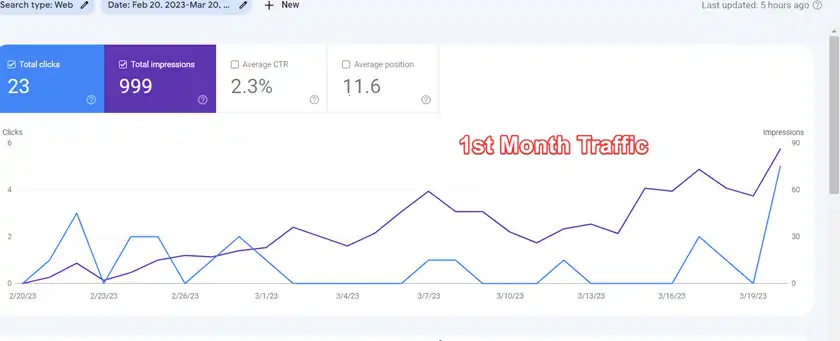
Month one: five articles, each 1,500 to 2,500 words, built around the target keywords. The writers covered each topic in depth, used the related entities a reader would expect, and matched the search intent of the query. Every piece went through our in-house editors before publishing.
The on-page work was standard, and I’d do it the same way again:
- Keyword-focused title tags and meta descriptions on every page
- Short, readable URLs with the keyword where it fit
- A clean H1, H2, H3 structure with no over-optimization
- Descriptive alt text on every image
- Contextual internal links between related articles
- Article and product structured data
- Ongoing Search Console checks for crawl and indexing problems
After the first three months with those 5 core articles, the numbers were modest: 10.6K impressions, 325 page views and a 3.1% average CTR.
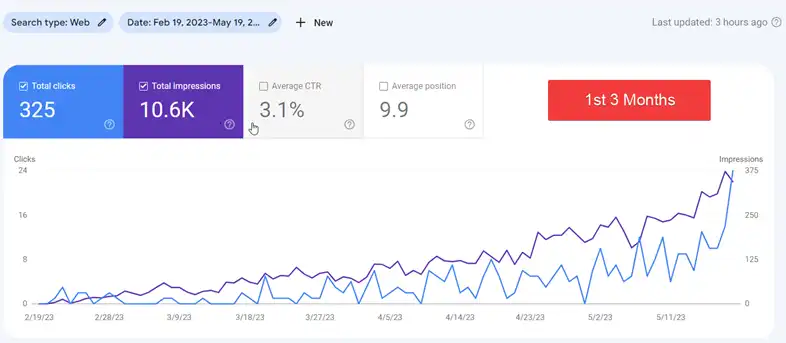
That result told us two things. The keyword picks were right, because Google was already showing the pages. But five articles were nowhere near enough to rank well.
Months 4 to 6: Ten Articles and Page Two
In months 4 to 6 we published 5 more articles, bringing the total to 10. The new pieces covered topics next to the originals, which gave Google a clearer picture of what the site was about.
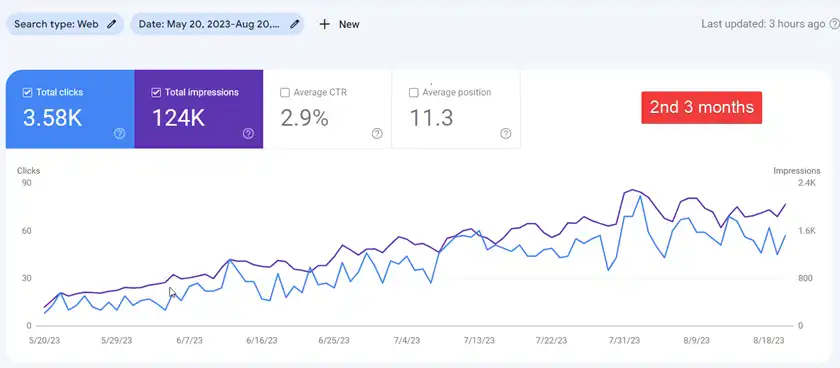
By the end of month 6, the site had 3.58K organic visitors, 124K impressions and an average position of 11 for its target keywords. Position 11 is the frustrating spot. You are one place off page one, visible enough to collect impressions but not clicks.
How Did We Push Past Page Two?
Two things changed after month six. We mined our own data for long-tail keywords, and we increased the publishing pace.
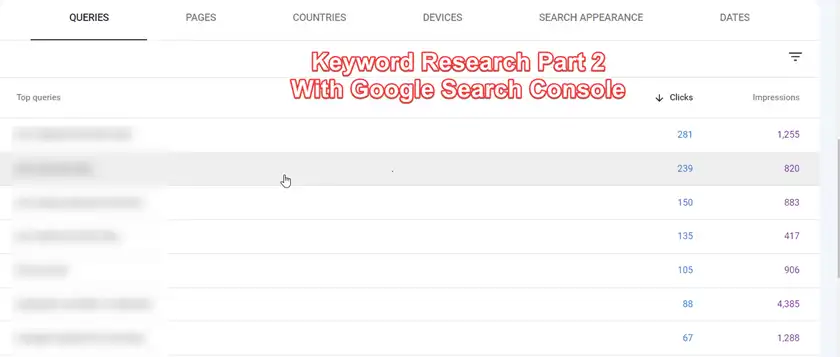
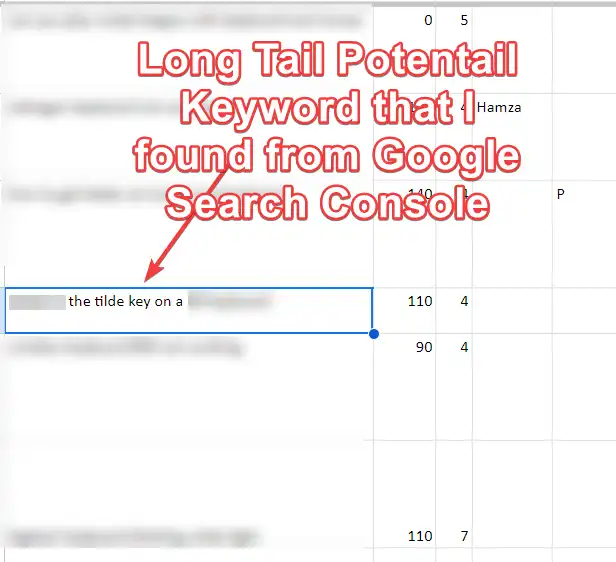
For the first, we went into Search Console and Google Analytics and pulled the queries the site was already getting impressions for. Those were topics Google already associated with us. We checked each one’s volume and competition in our tools and kept the long-tail terms with decent volume and weak competition. I wrote up the exact method in our guide to finding low-hanging keywords in the GSC performance report.
For the second, the early plan had settled at 5 quality articles a month. Once the long-tail list was ready, we moved to 10 articles a month.

At the same time, we reorganized every post into topic clusters and linked related articles to each other inside the body text. That is a topical map in practice. If you want to build one yourself, start with our guide on how to create a topical map.
What About Technical SEO and Links?
Technical work was steady maintenance, not heroics. We compressed images, minified code, used caching, kept the design responsive on mobile, and watched indexing in Search Console so new posts actually got into the index. When 404s showed up, we fixed them with 301 redirects.
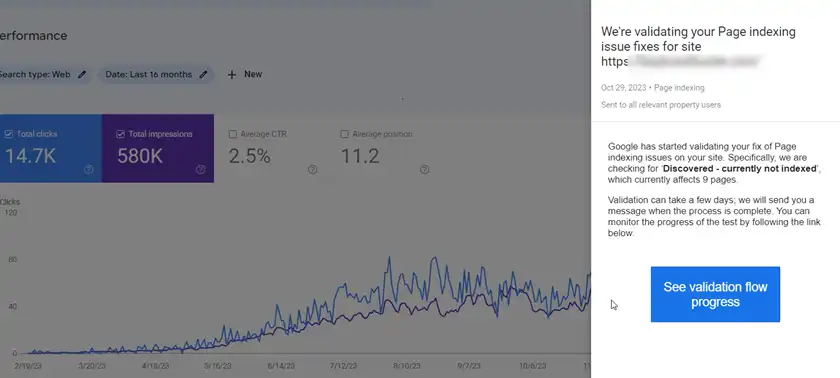
Search Console also pointed us at small fixes, like structured data errors, weak meta descriptions and missing image alt text. The site never had a penalty.
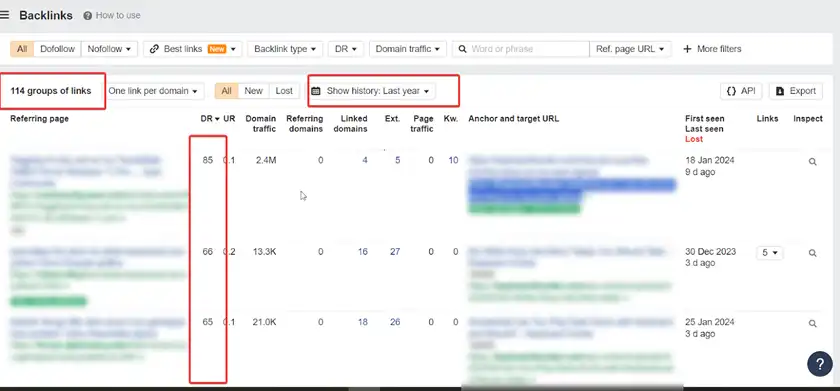
Now the part people don’t believe. We built zero links. No outreach, no guest posts, nothing. The site picked up a few natural backlinks from its content, and at the snapshot it sat at DR 7 and DA 12.
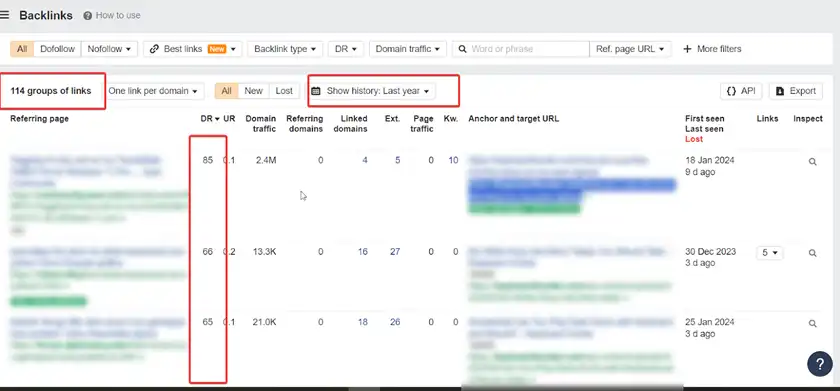
I’ll be straight: DR 7 is low. Those few links did not “boost authority” in any big way. What they prove is that an informational site in a low-competition niche can grow on content and structure alone for its first year, and it’s why my verdict in topical authority vs domain authority puts subject coverage ahead of any link score.
On trust signals, the writers had backgrounds in tech and computer hardware, and hands-on impressions went in where the writer had used the product. Articles referenced tech publications and keyboard communities, and the site showed clear company info and several ways to get in touch.
The Numbers Behind This Niche Site Case Study
Here is the growth path, in the metrics we actually recorded:
| Period | Articles live | Impressions | Traffic | Other |
|---|---|---|---|---|
| First 3 months | 5 | 10.6K | 325 page views | 3.1% avg CTR |
| Months 4–6 | 10 | 124K | 3.58K organic visitors | Avg position 11 |
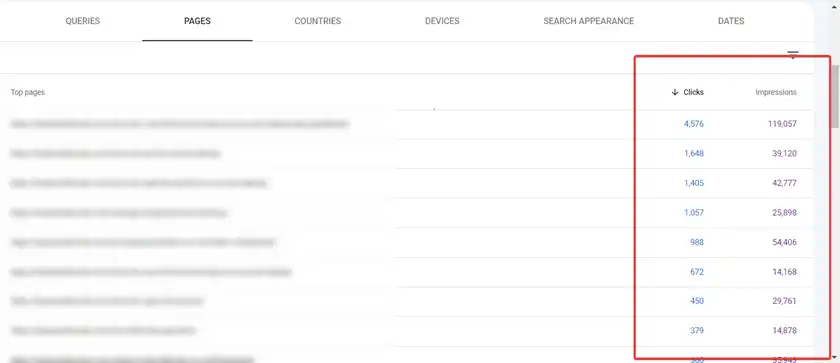
| Last 28 days (at 11+ months) | 111 | 109K | 2,053+ clicks | 71+ clicks/day avg |
| Last 3 months | 111 | n/a | 7,093+ | n/a |
| Lifetime (GSC 16-month view) | 111 | n/a | 14,746+ | 0 links built |
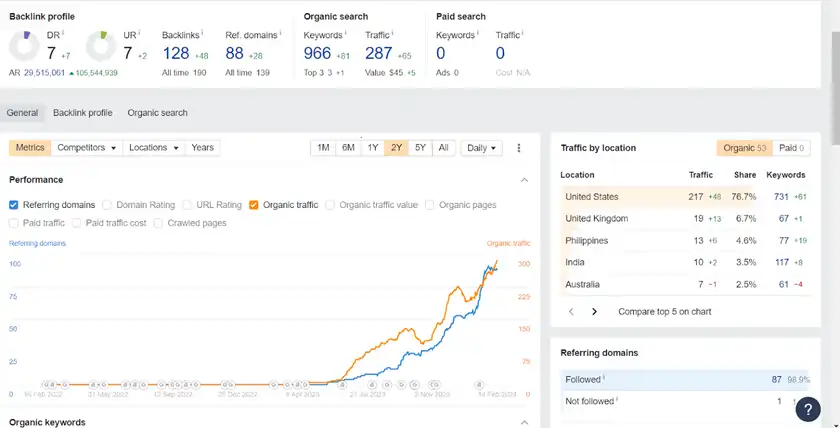
Our 12-month goal was 1,000 visitors a month. The site cleared more than double that before the domain turned one.

It also held top positions for several organic keywords with good search volume, and picked up a few backlinks along the way.
What Went Wrong?
The first six months were slow, and that was our choice, not bad luck. Ten articles in six months left the site stuck around position 11. Looking back, the 325 page views after three months were a clear signal that five articles could not carry a new domain.
We also have no revenue number to show you. Monetization was never applied, so this case study proves traffic, not income. If you are judging whether a niche site pays, that is a real gap.
And please read this with survivorship bias in mind. The keyboard site was the standout from a batch of 30 launches, which is exactly why I’m writing about it. When I review niche portfolios for people now, I tell them to judge the batch, not the winner, because one strong site says little about the other 29.
The last miss is about process. Our publishing cadence changed (5 a month, then 10 a month), the long-tail keyword push started, and internal linking was rebuilt, all in the same stretch. Those were reasonable calls at the time. But changing several variables at once makes it hard to say which one produced which jump, and I’d log each change with a date next time.
What Actually Moved the Needle?
Three things, in this order:
- Mining our own Search Console queries. The long-tail keywords Google already showed us for were the fastest wins.
- Doubling the pace to 10 articles a month. Coverage, not any single article, pulled the site off page two.
- Topic clusters with real internal links. Grouping posts and linking them made each new article lift the older ones.
Everything else (titles, alt text, speed) was hygiene. Necessary, but it didn’t cause the jump.
What Would I Do Differently Today?
I’d publish 10 a month from day one. The early caution cost us months at position 11.
I’d also rethink the mix. Of our 111 articles, 78 were AI-assisted with human editing. In March 2024 Google expanded its spam policies, and they now define scaled content abuse as “when many pages are generated for the primary purpose of manipulating search rankings and not helping users,” no matter how the pages are made (Google spam policies). Today I’d keep AI for research and outlines, and put real product use and a named author behind every review. Our post on how to maintain E-E-A-T for your blog covers how we do that now.
And I’d set up monetization tracking early, so the next case study can show income, not just clicks.
If you’d rather have us look at your own site’s numbers, our free SEO audit is the place to start.
Frequently Asked Questions
How long does a new niche site take to get traffic?
In this case, the first three months brought 10.6K impressions but only 325 page views. Real traffic came after month six, once we passed 10 articles and moved to 10 per month. By 11 months the site was getting 71+ clicks a day. Your timeline depends on competition and publishing pace.
Can a niche site rank without backlinks?
Ours did, in a low-competition informational niche. We built zero links, and the site reached 2,053+ clicks in 28 days at DR 7. That will not hold in competitive commercial niches, where links still decide a lot of rankings.
What niche site metrics should I track?
Track impressions, clicks, CTR and average position in Search Console, plus total visitors in your analytics tool. Watch average position most closely in the early months. Ours sat at 11 after six months, which showed exactly where more content was needed.
How many articles does a niche site need to rank?
There is no fixed number. Our site had 10 articles at six months and was stuck on page two. It had 111 articles when it hit 2,053 clicks a month. Coverage of a topic cluster matters more than a count.
Last updated: September 2026 by Mizanur Rahman