
If you want to know how to increase website traffic for SaaS, start by admitting that not all traffic is equal. The plan that works is usually a SaaS SEO strategy built from the bottom of the funnel up: pages for buyers already comparing tools first, then pages that answer the problems your product solves, with paid and partner channels filling the gaps SEO can’t fill yet. What comes first depends on your stage, your price and whether anyone searches for your category at all.
I’ve worked on SEO since 2018, and SaaS sites are the ones where I most often see big traffic numbers and flat signups sitting side by side. A blog post about “what is a CRM” can pull 20,000 visits a month and produce almost nothing. So this guide is about qualified traffic, and it branches where your situation changes the answer.
Four Signals That Choose Your SaaS Traffic Plan
Check these before you spend a dollar or write a word:
- Search demand for your category. Do people already search for tools like yours, or are you creating a new category?
- Price and sales motion. A $29/month self-serve tool and a $40,000/year sales-led platform need different visitors in very different volumes.
- Time and runway. SEO compounds, but slowly. If you need pipeline this quarter, paid channels carry more weight.
- Domain strength. A new domain can’t win head terms yet. An older one with links can go after them now.
What Is SaaS SEO, and Why Does It Work Differently?
SaaS SEO is search optimization for software companies, where the goal is a trial, demo or signup rather than a checkout. Three things make it different from ecommerce or local SEO. The buyer researches alone for weeks. The product is abstract, so pages must explain outcomes. And the money comes from retention, so post-signup searches (setup, integrations, troubleshooting) matter too.
That solo research phase is the whole game. Gartner’s research on B2B buying found buyers spend only 17% of their buying time meeting potential suppliers. The rest happens in search results, review sites and peer conversations, long before anyone fills in your demo form.
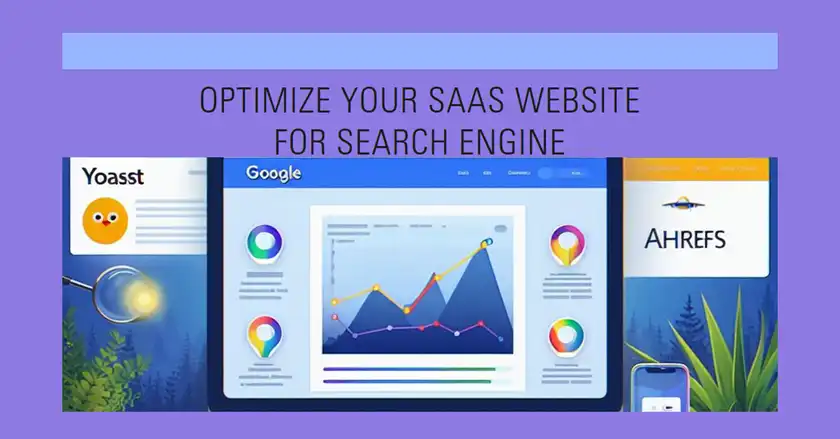
The Main Path: A SaaS SEO Strategy for a Known Category
Most SaaS companies I talk to sell into a category people already search for: project management, email marketing, invoicing, help desk. If that’s you, here’s the order I’d follow.
Start With Pages Buyers Use to Decide
Bottom-of-funnel pages get less traffic and far more signups. I mean “[competitor] alternatives,” “[your tool] vs [competitor],” integration pages (“[tool] for Slack”), use-case pages and a pricing page that actually shows prices. Someone searching “best open source project management tools” is choosing. Someone searching “what is project management” is studying.
Build these first, even if each keyword shows 50 searches a month. Ten pages at 50 searches with buyer intent will usually beat one guide at 5,000 searches with student intent, and I show how I find and rank those phrases by closeness to a signup in my SaaS keyword research guide. If you need help sizing that list, our keyword research service includes topical maps built for exactly this.
Then Answer the Problems Your Product Solves

Next, write for people who have the problem but haven’t picked a tool: “how to track billable hours,” “how to reduce support ticket volume.” These pages rank more easily than category head terms and can introduce your product naturally, because the fix genuinely involves software.
Be picky here. Ahrefs found 96.55% of pages in its index get zero traffic from Google. My take is that publishing 12 pages a month on topics nobody searches is the most expensive way to feel busy. Write fewer posts, each tied to a real query and a real product feature.
Fix the Technical Basics Once
SaaS marketing sites break in predictable ways. The site is built in a JavaScript framework that renders content late, the docs live on a subdomain nobody links to, or the staging site got indexed. Check these once, properly, and then monitor.
For speed, hold the Core Web Vitals “good” thresholds: LCP within 2.5 seconds, INP within 200 milliseconds and CLS at or below 0.1. Heavy chat widgets and analytics tags are the usual INP problem on SaaS homepages.
Earn Links From Your Own Ecosystem
SaaS has a link advantage most industries don’t. Integration partners list you in their app directories. Customers write about their stack. A small original dataset from your own product (anonymized, of course) earns links from journalists. I’d start there before paying for anything, and my guide to SaaS link building before and after product-market fit goes deeper.
How to Increase Website Traffic for SaaS When Nobody Searches for Your Category
This is the first branch, and it’s where a lot of founders get stuck. If you invented a category, keyword tools will show zero volume for it. SEO alone can’t send traffic to searches that don’t exist.
So flip the order. Create demand first through channels that don’t need search volume: founder-led posts on LinkedIn, podcasts, communities your buyers already use and partnerships with creators in your niche. Meanwhile, point your SEO at the problem, not the category. People may not search “revenue intelligence platform,” but they do search “why did my sales forecast miss.”

Creator partnerships deserve a closer look here. Pick people who already make content about your use case or your integrations, not people with the largest audience. A niche creator with 20,000 engaged followers who genuinely uses tools like yours beats a celebrity who doesn’t. Co-create a webinar or a tutorial, give them real access and pay them properly.
When the category starts getting searched (you’ll see branded and category queries appear in Search Console), shift budget back toward the main path above.
Branch 2: When Your Product Sells for Thousands a Year
High-price, sales-led SaaS plays a different game. You don’t need 100,000 visitors. You need the right 3,000, and you need them from specific companies and job titles.
Here, SEO narrows. Focus on comparison pages, security and compliance pages (buyers’ IT teams search those), ROI pages and case studies. Paid gets sharper too. LinkedIn Ads let you target by job title, company size and industry, which is expensive per click but often cheap per qualified meeting. Retargeting keeps you in front of the buying committee while they deliberate for months.
In my experience, the mistake in this branch is copying a self-serve playbook: dozens of top-of-funnel posts that attract students and freelancers who’ll never buy a $40,000 contract.
Should You Pay for Traffic While You Wait for SEO?
Usually yes, but with a purpose. My favorite use of paid traffic for SaaS is learning. Run Google Ads on the bottom-funnel keywords you plan to rank for, and within a few weeks you’ll know which ones actually produce trials. Those become your SEO priorities.
- Google Ads: best for high-intent searches like “[category] software” and competitor terms.
- Meta ads (Facebook and Instagram): better for low-price, broad-audience tools and video demos.
- LinkedIn Ads: expensive, precise, right for B2B tools with high contract values.
- Retargeting: cheap insurance for visitors who read a pricing page and left.
Here’s the honest trade-off. Paid traffic stops the day you stop paying. Organic traffic keeps arriving, but it takes months to build. A healthy SaaS mix uses paid to learn and fill gaps, and SEO to lower acquisition cost over time. If a paid channel doesn’t produce signups after a fair test, cut it and move the money.
Edge Cases That Change the Plan
- Programmatic pages: Integration or use-case pages generated at scale can work, but once you pass 30 near-identical pages, each needs real unique content or you’re building doorway pages. Before launching a templated set, I run the scaled content abuse test in my guide to SaaS feature, integration and alternative pages.
- Free tools: A genuinely useful calculator or checker can outrank blogs and attract links for years. It’s a product decision as much as an SEO one.
- Docs and help centers: These pages often rank for high-intent “how do I” searches. Keep them crawlable and link them from the main site.
- AI search: ChatGPT and Google’s AI Overviews now answer many “best tool for X” questions directly. Being cited there depends on clear, factual pages and mentions on sites those systems trust.
SaaS Traffic Decision Matrix
| If your category is… | And your price is… | Then lead with… |
|---|---|---|
| Known, searched | Low, self-serve | Bottom-funnel SEO pages, then problem content, Google Ads to test |
| Known, searched | High, sales-led | Comparison and compliance pages, LinkedIn Ads, retargeting |
| New, not searched | Low, self-serve | Communities, creators, problem-led SEO |
| New, not searched | High, sales-led | Founder-led content, events, targeted LinkedIn, case studies |
| Any | Any, new domain | Long-tail and integration pages before head terms |
When Should a SaaS Team Get Outside Help?
Bring in a technical SEO specialist if your marketing site runs on a JavaScript framework and Google isn’t indexing key pages, or if you’re migrating domains. Bring in strategy help if you’ve published for a year and signups from organic haven’t moved. If that sounds familiar, our SEO service starts at $999/month, and the free audit will tell you honestly whether you need it. For a sense of pacing, my 3-month SEO plan shows what the first quarter should look like.
Frequently Asked Questions
What Is the Easiest Traffic Generation for SaaS?
The easiest early wins are usually integration pages, comparison pages and your own branded searches, because competition is thin and intent is high. Listing your product in partner app marketplaces is also quick. None of these produce huge volume, but they produce visitors who sign up.
Which Traffic Source Brings the Best Organic Traffic for SaaS?
Bottom-of-funnel organic search tends to convert best, because the visitor is already comparing tools. Measure it properly, though: track trial signups or demo requests as key events in GA4 by landing page, not just sessions. The best source for your product is the one your own data shows, not a benchmark.
Is Influencer Marketing Worth It for B2B SaaS?
It can be, if you pick creators by audience fit rather than follower count. Niche experts, analysts and practitioner creators who already use similar tools send smaller but warmer traffic. Treat it as a relationship over several months, not a one-off sponsored post.
Do SaaS Companies Still Need a Blog in 2026?
Yes, but a smaller and sharper one. A blog that answers real problems your product solves still earns rankings, links and AI citations. A blog filled with generic definitions mostly earns server costs. I’d rather see 30 excellent posts than 300 forgettable ones.
Last updated: September 2026 by Mizanur Rahman